What to Check Before Buying a Liquidation Pallet
Buying a liquidation pallet is not just about finding inventory at a lower purchase price. The real question is whether that inventory makes sense for the way you sell.
A pallet that works well for an online reseller may be difficult for a flea market vendor. Inventory that fits a discount store may require too much testing or processing for a smaller operation. Even a pallet with a high original retail value can become difficult inventory if demand is weak or the condition does not match your customers.
That is why a smart buy starts before the pallet reaches your floor.
Before committing to a liquidation pallet, take time to understand what you are buying, what condition you should expect, where you can realistically sell the merchandise, and what will happen if part of the load moves slower than expected.
Know What Type of Inventory You Are Buying
One of the first things to understand is the type of liquidation inventory being offered.
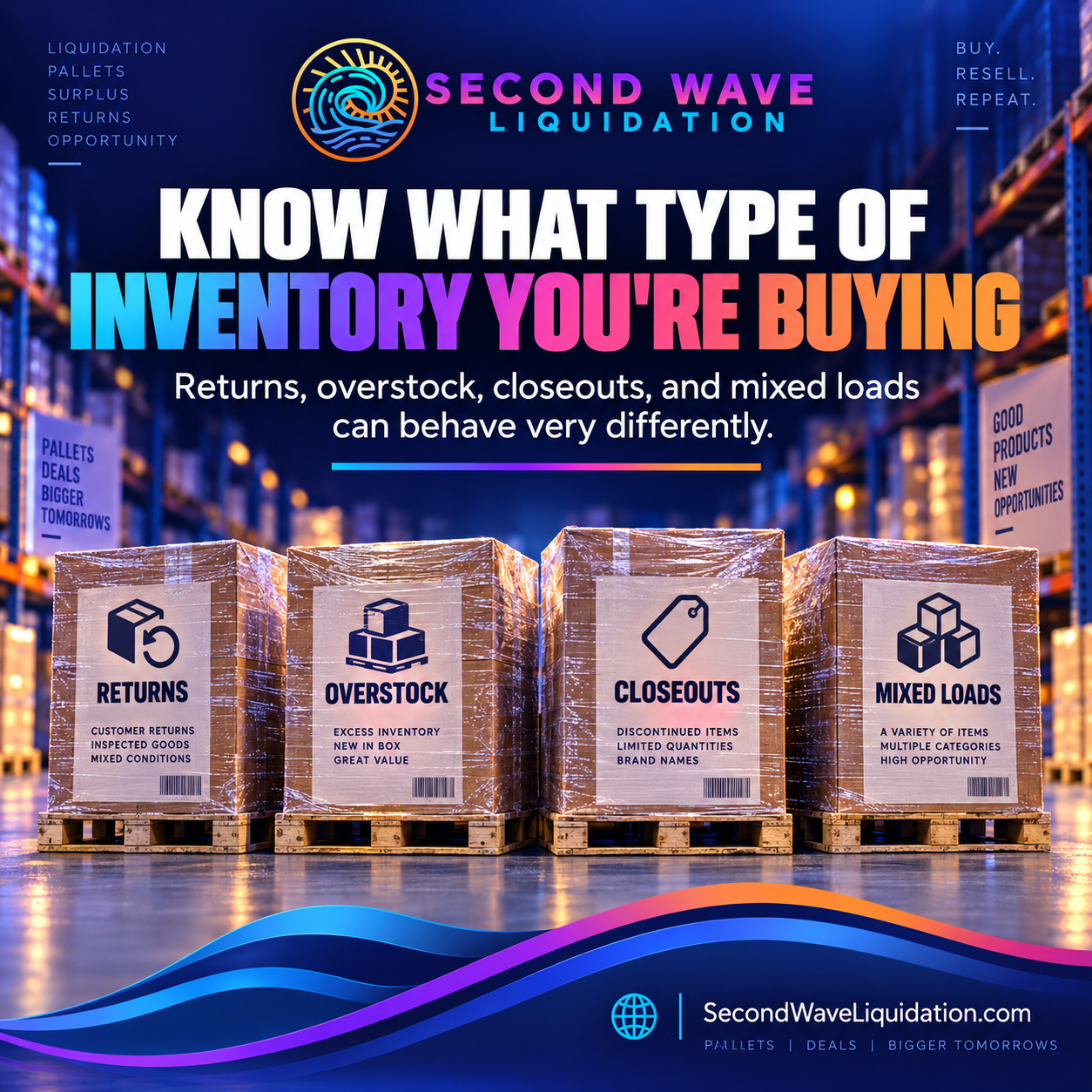
Customer returns, overstock, closeouts, shelf pulls, and mixed liquidation loads can behave very differently once you begin processing and reselling them.
Overstock, for example, may require less product testing than a load containing customer returns. Returns may include merchandise in a wide range of conditions, from items that appear unused to products that need inspection, testing, cleaning, repackaging, or repair.
Closeouts may offer a more consistent product category, but you still need to think about whether your customers actually want that merchandise.
Mixed pallets can provide variety, which may work well for bin stores, flea markets, discount stores, or sellers using several resale channels. That same variety can create more work for a reseller who prefers to list similar products in batches.
Do not assume that every liquidation pallet should be handled the same way. Understanding the inventory type gives you a better idea of the labor, space, testing, and selling strategy the load may require.
Check the Condition Before You Calculate the Opportunity
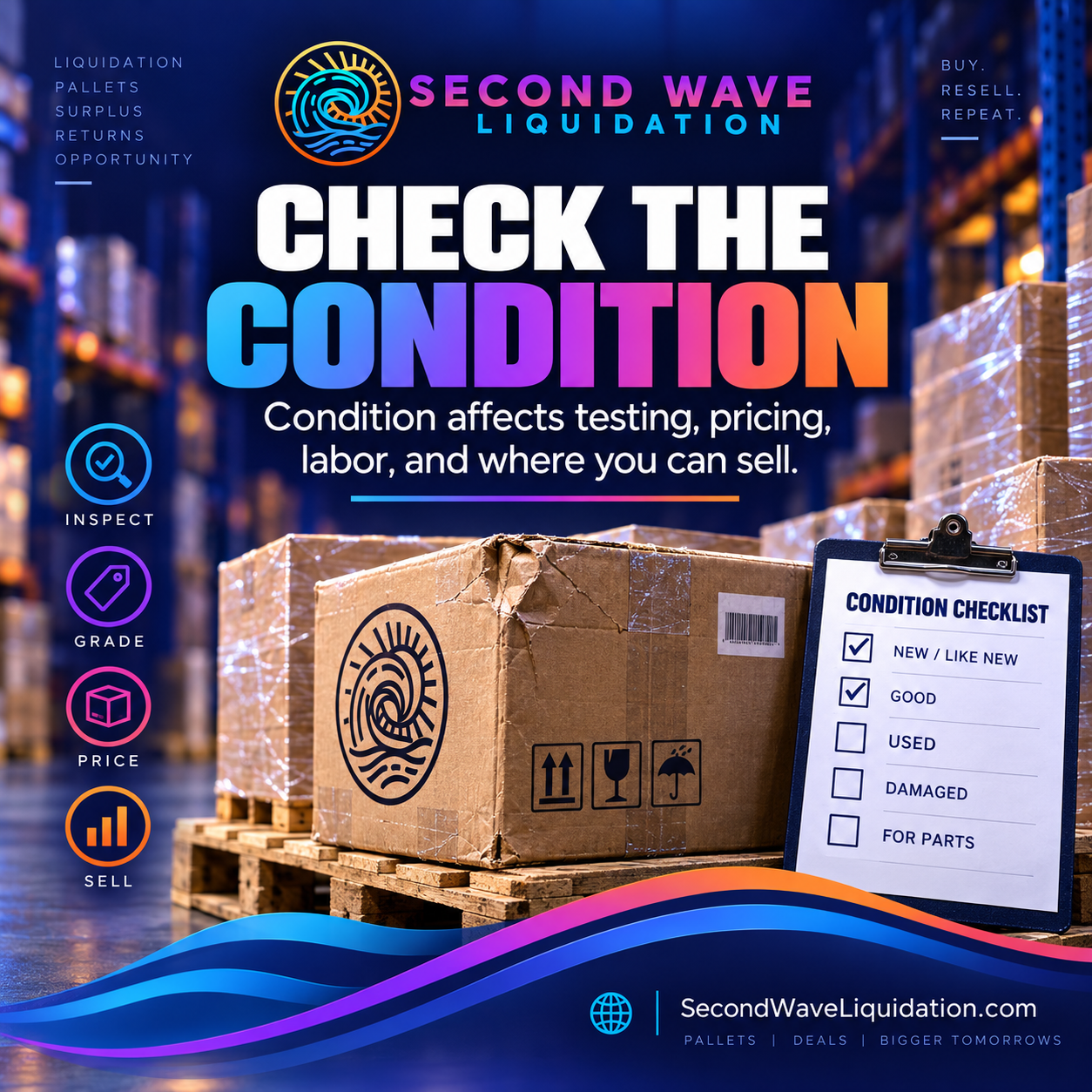
Condition affects much more than the final selling price.
It can determine how much time you spend processing the inventory, whether products need testing, how you describe them to buyers, and which resale channels are practical.
If a pallet contains customer returns, consider the possibility of opened packaging, missing accessories, cosmetic wear, incomplete sets, or products that require functional testing.
That does not automatically make returns bad inventory. It simply means the condition needs to fit your operation.
A seller with a testing area, available labor, replacement parts, and multiple resale channels may be comfortable handling merchandise that requires additional work. Another seller may need inventory that can move more quickly with less processing.
Packaging matters too. Damaged retail boxes may not matter much in some flea market or bin store environments, but packaging can have a larger impact when selling online or to customers expecting a more traditional retail presentation.
The purchase price is only one part of the decision. The time and resources needed to make products ready for resale should also be considered.
Think About Where You Actually Sell
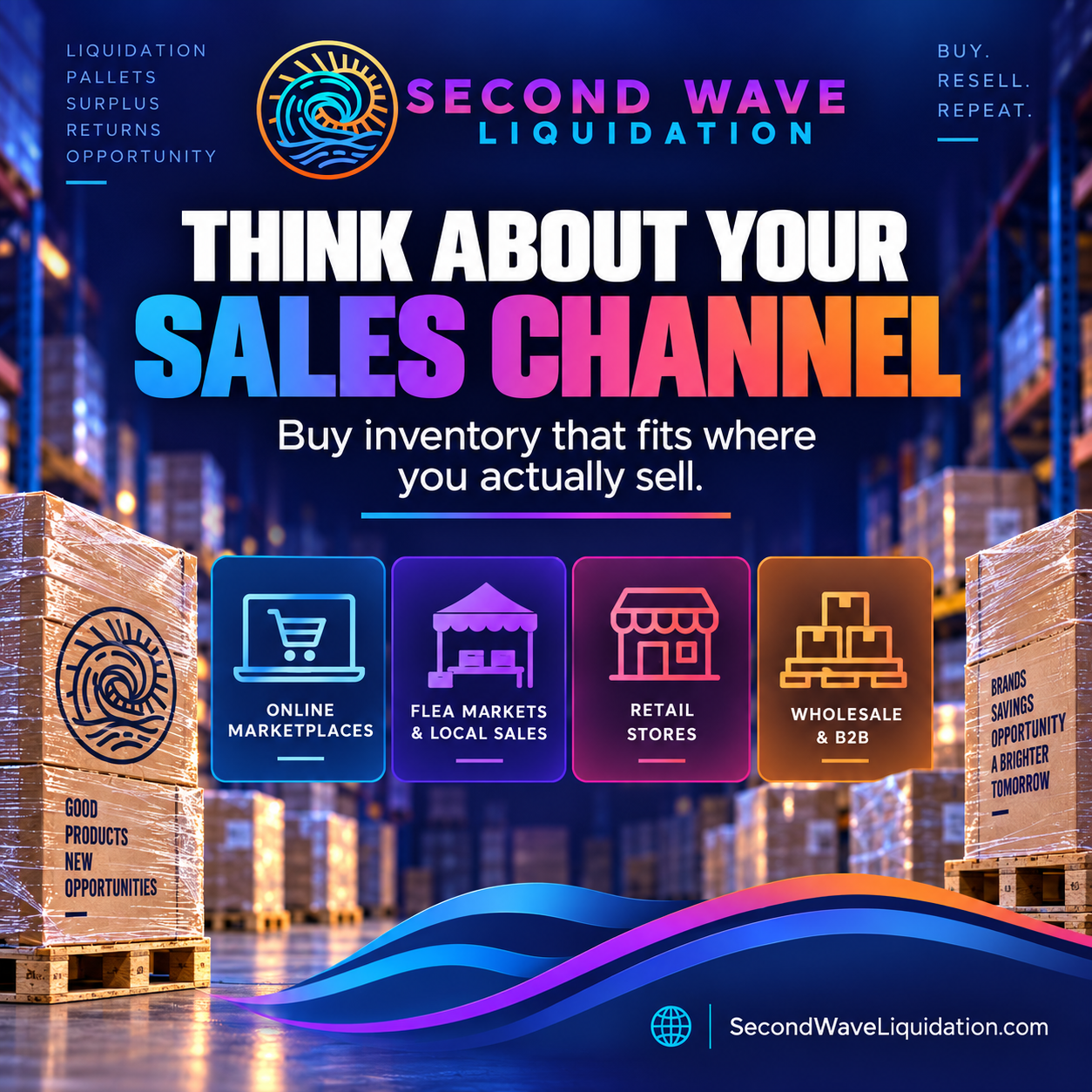
Your sales channel should influence what you buy.
An online reseller may focus on products with recognizable search demand, manageable shipping dimensions, and enough resale value to justify marketplace fees, packing materials, and fulfillment time.
A flea market vendor may care more about products that are easy to display, explain, and sell quickly in person.
Bin stores may need a broad product mix that works within their pricing structure and creates enough variety for customers to keep digging.
Discount stores may look for inventory that can be sorted into clear departments and priced efficiently.
Wholesale or export buyers may think more about volume, product consistency, freight, and whether the merchandise fits the needs of their downstream buyers.
Before buying a pallet, ask a simple question: Where will these products actually be sold?
If the answer is unclear, the inventory may be harder to move than it first appears.
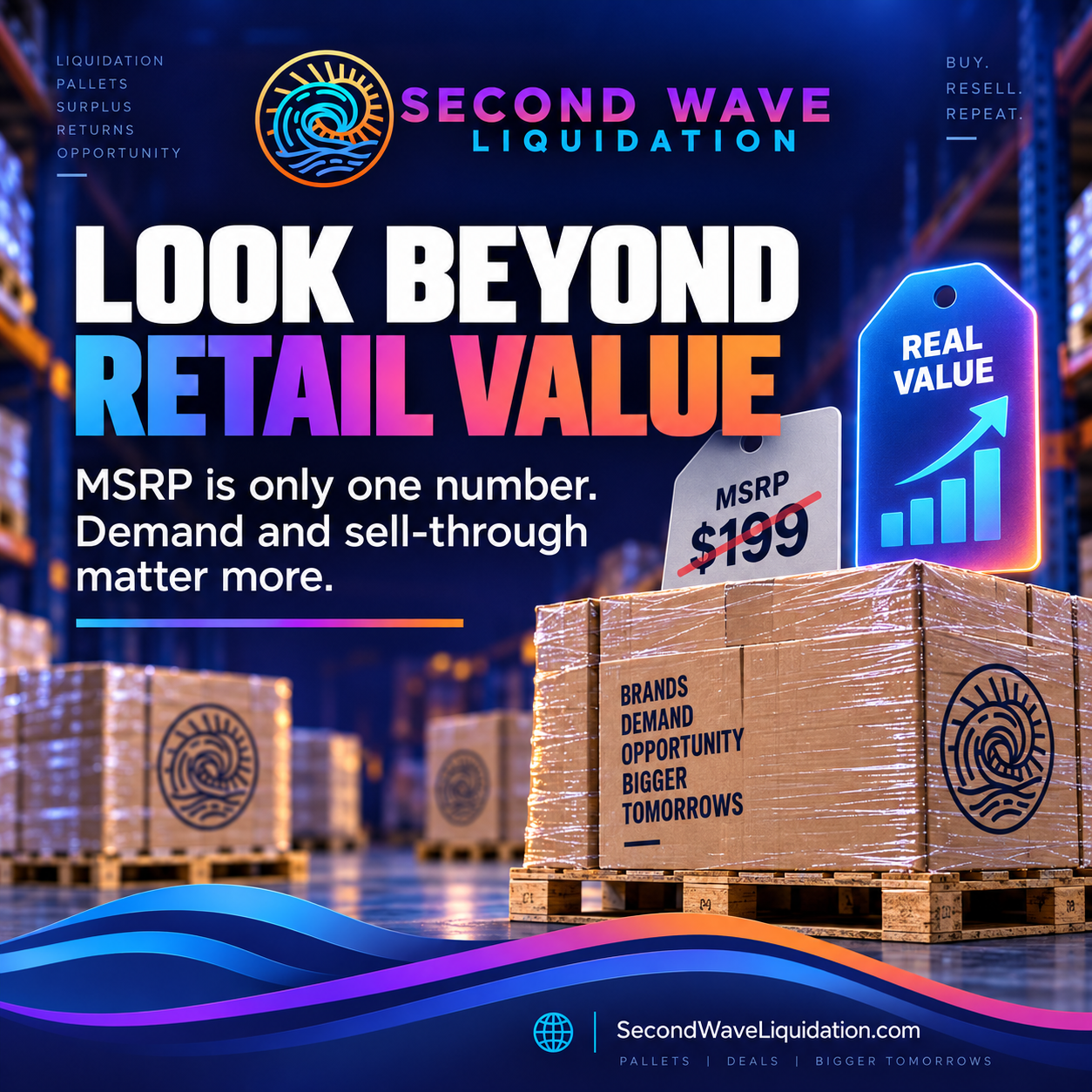
Look Beyond the Original Retail Value
Original retail value can provide useful context, but it should not be the only number driving your decision.
A product may have had a high MSRP when it was new, but that does not automatically mean buyers in your market will pay close to that amount.
Current demand, product condition, competition, seasonality, marketplace fees, and available resale channels can all affect what the merchandise is realistically worth to your business.
Look at the kinds of prices customers are actually paying in the channels you use.
For online selling, also think about shipping expenses, platform fees, returns, and the time required to create listings.
For local selling, consider how quickly similar products tend to move and whether your customers regularly buy that category.
Inventory turnover often matters more than an impressive retail-value number. Merchandise that can be sold steadily at realistic prices may be more useful than higher-MSRP products that sit in storage for months.
Calculate the Work Behind the Pallet
A pallet does not become sellable inventory the moment it arrives.
Someone may need to unload it, sort the merchandise, inspect packaging, test products, research pricing, clean items, photograph them, create listings, label products, or move them to the sales floor.
That process takes time.
Before purchasing, think about your current workload and available staff. If you already have several pallets waiting to be processed, adding more inventory may create a backlog rather than an opportunity.
Storage is another important consideration.
Bulky products, seasonal merchandise, or slow-moving categories can take up valuable space. For sellers working from a smaller warehouse, retail location, garage, or storage unit, space can become one of the biggest limitations on buying volume.
Inventory that fits your physical operation is usually easier to manage.
Factor in Freight and Other Selling Costs
Your total cost does not stop at the pallet price.
Depending on the transaction and your business model, you may also need to account for freight or transportation, unloading, labor, testing supplies, storage, packaging materials, marketplace fees, shipping to customers, and possible returns.
These costs do not need to make a pallet unattractive, but they should be understood before you buy.
A purchase can look very different after transportation and processing costs are added.
Think in terms of total inventory cost rather than focusing only on what you pay for the merchandise itself.
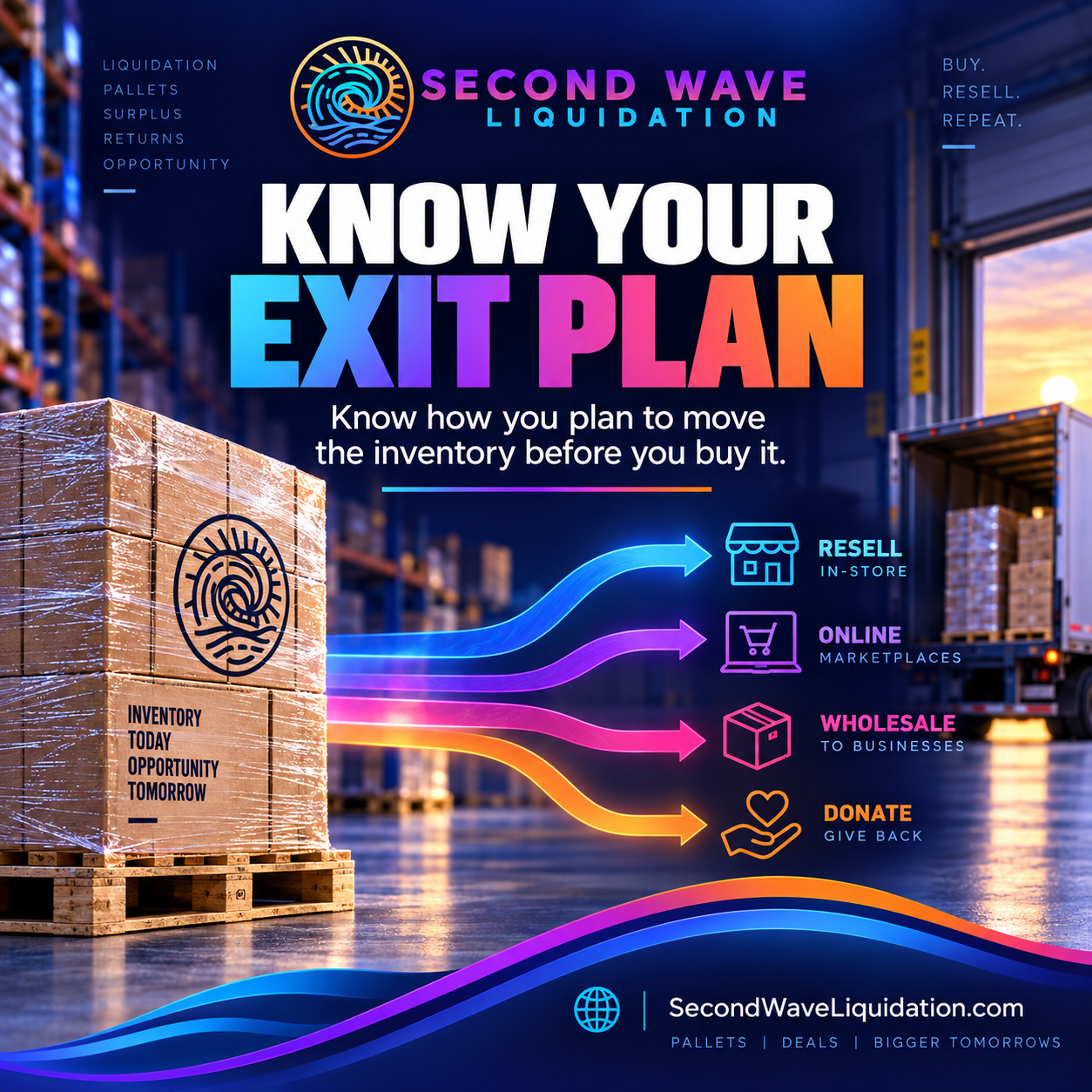
Know Your Exit Plan Before You Buy
Every pallet should have more than one possible way out of your building.
Your primary plan may be to sell individual products online, stock your retail store, fill bins, or sell at flea markets. But what happens to merchandise that does not fit that channel?
Could slower-moving products be bundled?
Could some inventory be sold locally instead of shipped?
Could remaining merchandise work in a discount section, clearance area, or secondary resale channel?
Could certain items be grouped into smaller wholesale lots for other resellers?
Having a backup plan makes it easier to manage products that do not sell the way you originally expected.
The goal is not to predict exactly how every item will perform. It is to avoid buying inventory without thinking about how you will move it.
Before buying a liquidation pallet, look at more than the purchase price or stated retail value.
Understand the type of inventory, expected condition, processing requirements, available storage, freight, sales channels, customer demand, selling costs, and your plan for merchandise that moves slowly.
A liquidation pallet makes more sense when it fits the business you already operate and the customers you already serve.
If you have a clearer idea of the inventory types and conditions that work for your resale business, staying connected to new opportunities becomes much easier. You can join the Second Wave Liquidation Buyer List to keep an eye on liquidation and wholesale inventory opportunities that may fit your sourcing strategy:
Frequently Asked Questions
1. What should I check first before buying a liquidation pallet?
Start by identifying the inventory type and expected condition. Knowing whether you are considering customer returns, overstock, closeouts, or a mixed load helps you estimate the processing and resale work involved.
2. Are customer return pallets riskier than overstock pallets?
Customer returns can involve more condition variation and may require additional testing, cleaning, or inspection. Whether that works for you depends on your ability to process and resell merchandise in different conditions.
3. Should I buy a pallet based on its original retail value?
Retail value can be useful for reference, but it should not be the main reason you buy. Actual demand, realistic selling prices, condition, fees, and sell-through are more important to your business.
4. How important is product condition when buying liquidation inventory?
Condition is one of the most important factors because it affects resale pricing, testing requirements, customer expectations, processing time, and which sales channels you can use.
5. How do I know if a pallet fits my sales channel?
Look at the categories, size, condition, and likely selling price of the merchandise. Compare those factors with what normally works on your online store, marketplace account, flea market booth, bin store, discount store, or wholesale operation.
6. What extra costs should I consider besides the pallet price?
Possible costs include freight, transportation, unloading, labor, storage, testing, cleaning, packaging materials, marketplace fees, shipping, and customer returns.
7. Should I have storage space ready before purchasing pallets?
Yes. Make sure you have enough room to receive, sort, process, and store the inventory without interfering with merchandise you are already trying to sell.
8. What does having an exit plan mean in liquidation?
An exit plan is your strategy for moving the merchandise. It should include your primary sales channel and possible alternatives for products that are slower to sell.
9. Is the cheapest liquidation pallet usually the best deal?
Not necessarily. A lower purchase price can still create problems if the merchandise requires too much labor, has weak demand, takes up excessive storage, or does not fit your customers.
10. Can one liquidation pallet work across multiple resale channels?
Yes, depending on the product mix and condition. Some sellers divide a pallet between online marketplaces, local sales, flea markets, retail shelves, bin stores, clearance sections, or smaller wholesale lots.
