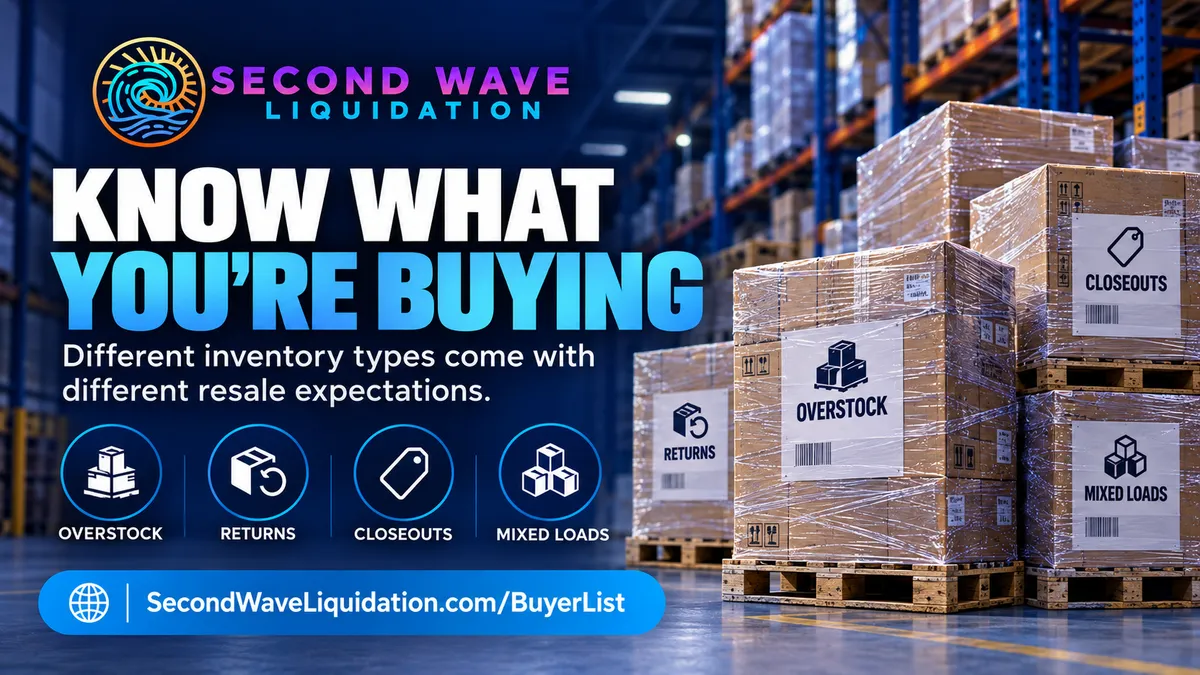
Understanding Different Types of Liquidation Inventory
Buying liquidation inventory starts with understanding what is actually inside the opportunity you are considering.
Terms such as overstock, customer returns, closeouts, and mixed liquidation loads may all appear in the secondary market, but they do not describe the same type of merchandise. Each can come with different expectations for condition, processing, testing, pricing, and resale.
For resellers, pallet buyers, bin stores, flea market vendors, discount stores, and online sellers, knowing the inventory type before buying can help you determine whether the merchandise fits the way your business operates.
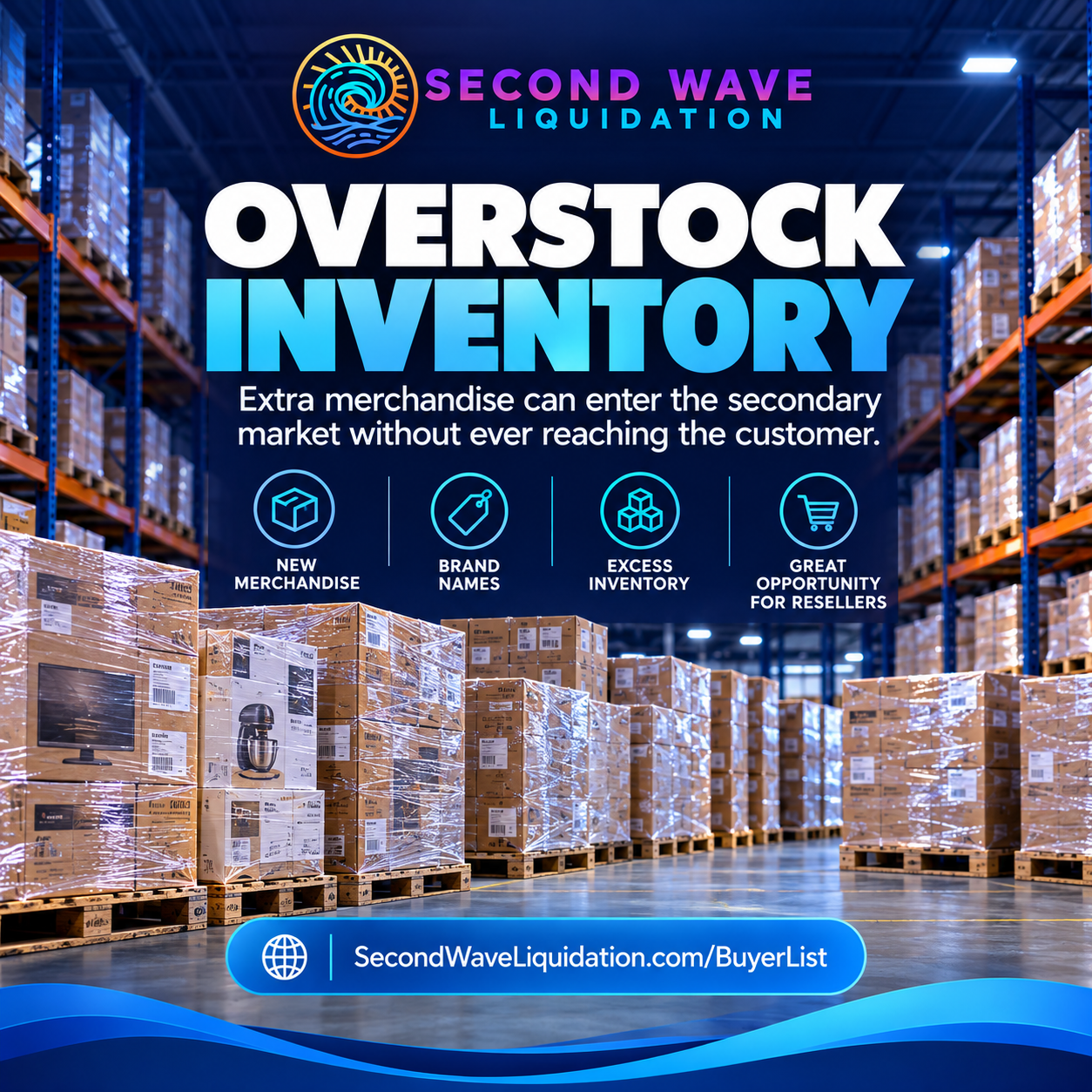
Overstock Inventory Has Never Necessarily Reached a Customer
Overstock generally refers to merchandise that a business has more of than it needs.
There are many reasons products can become overstock. Demand may have changed, purchasing forecasts may have been higher than actual sales, or a business may simply need to free up warehouse or shelf space.
One important distinction is that overstock merchandise may enter the secondary market without ever being sold to or used by a customer.
That does not automatically mean every item will arrive in perfect retail condition. Packaging can still be affected by storage, transportation, handling, labeling, or other factors.
For a reseller, overstock can sometimes require less product testing than heavily returned merchandise, but buyers should still evaluate the available information about condition and packaging before deciding how the inventory fits their business.
A discount store may care heavily about shelf presentation, while a flea market seller may be comfortable with cosmetic packaging issues if the merchandise itself is usable.
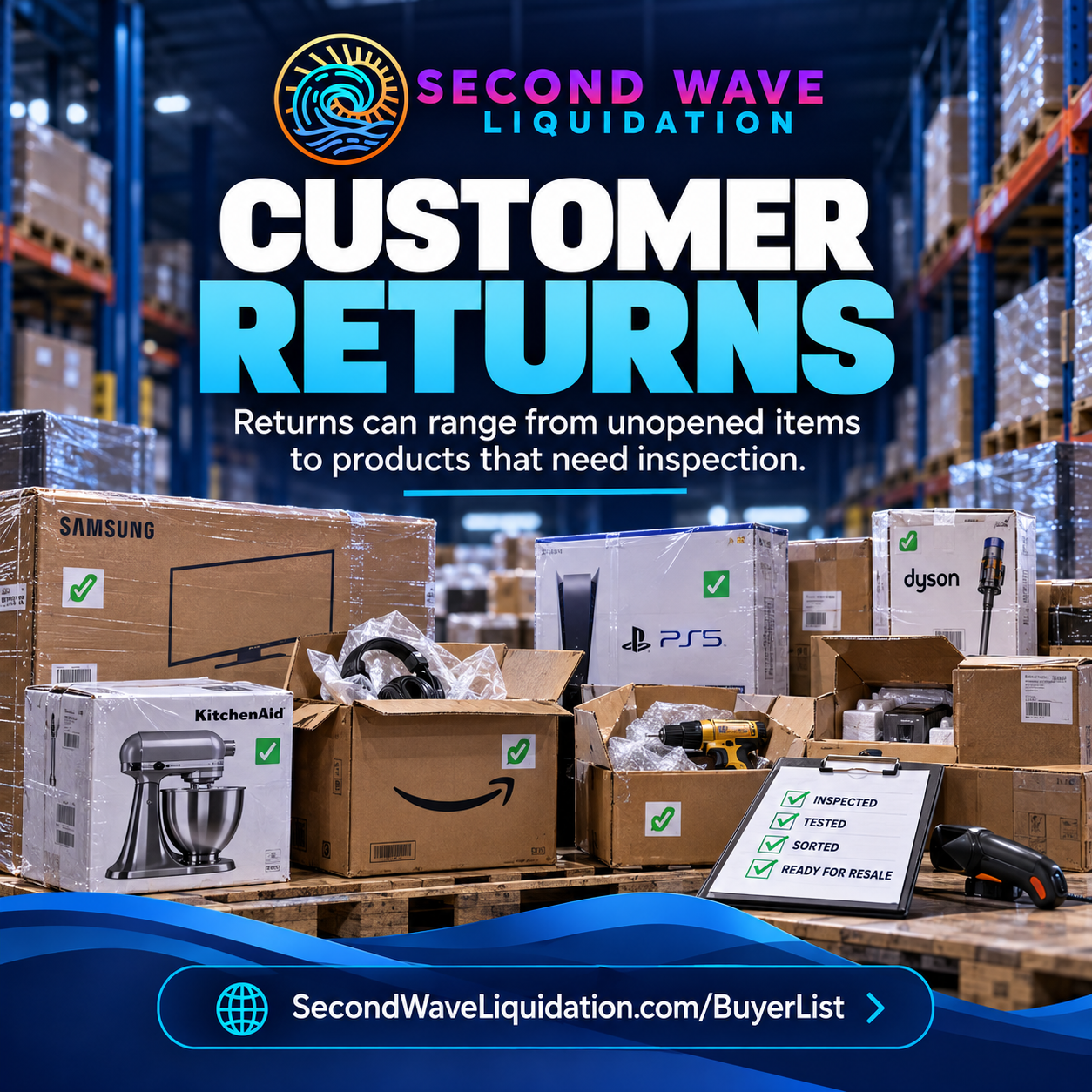
Customer Returns Require More Inspection
Customer return inventory can vary much more widely.
One returned product might still be unopened. Another may have been opened briefly and returned because the customer changed their mind. Other items may have damaged packaging, missing accessories, cosmetic wear, or problems that require inspection.
That variation is what makes processing important.
If you buy customer returns, consider what happens after the inventory arrives.
Do you have enough time and staff to sort it?
Can you test products when necessary?
Do you have a system for separating sellable merchandise from items that require additional work?
Where will you sell products with different conditions?
An online seller may need to inspect individual products carefully because buyers expect accurate descriptions and condition details. A bin store operating on a volume model may process merchandise differently.
Neither approach is automatically better. The inventory needs to match the sales channel.
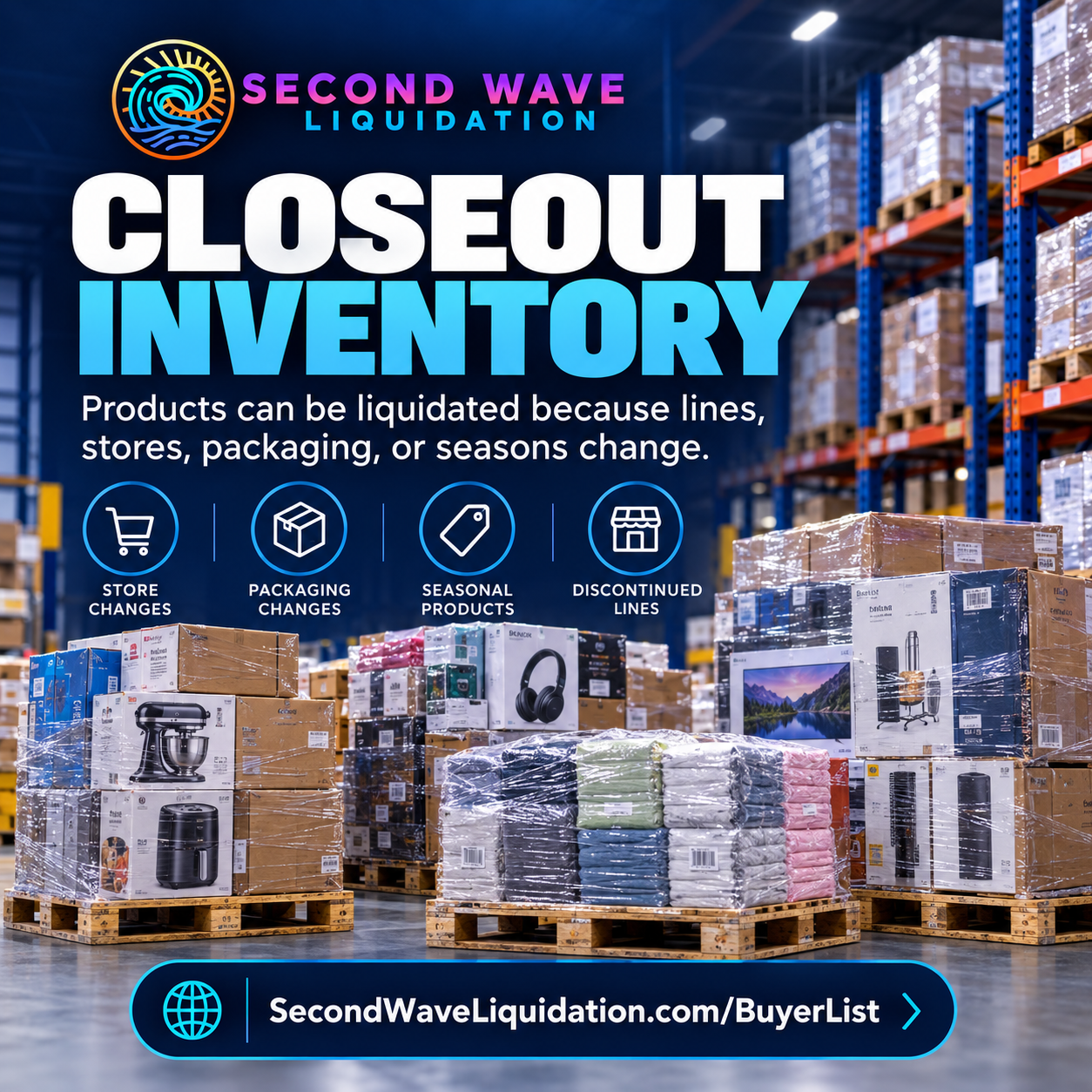
Closeout Inventory Often Comes From Business Changes
Closeout inventory can enter liquidation channels when merchandise is being cleared because something around the product has changed.
A product line might be discontinued. Packaging may be redesigned. A season may end. A store may be changing its merchandise strategy or clearing certain categories.
The important point is that liquidation does not always mean something is wrong with the actual product.
However, buyers should still think about demand.
An item being discontinued does not automatically make it easy to sell. Some closeout products may remain attractive to customers, while others may be tied to a narrow season, style, model, or use case.
Before purchasing closeout merchandise, consider how long you realistically expect it to take to move through your sales channel.
Inventory that occupies warehouse or retail space for too long can create problems even when the original purchase price looks attractive.
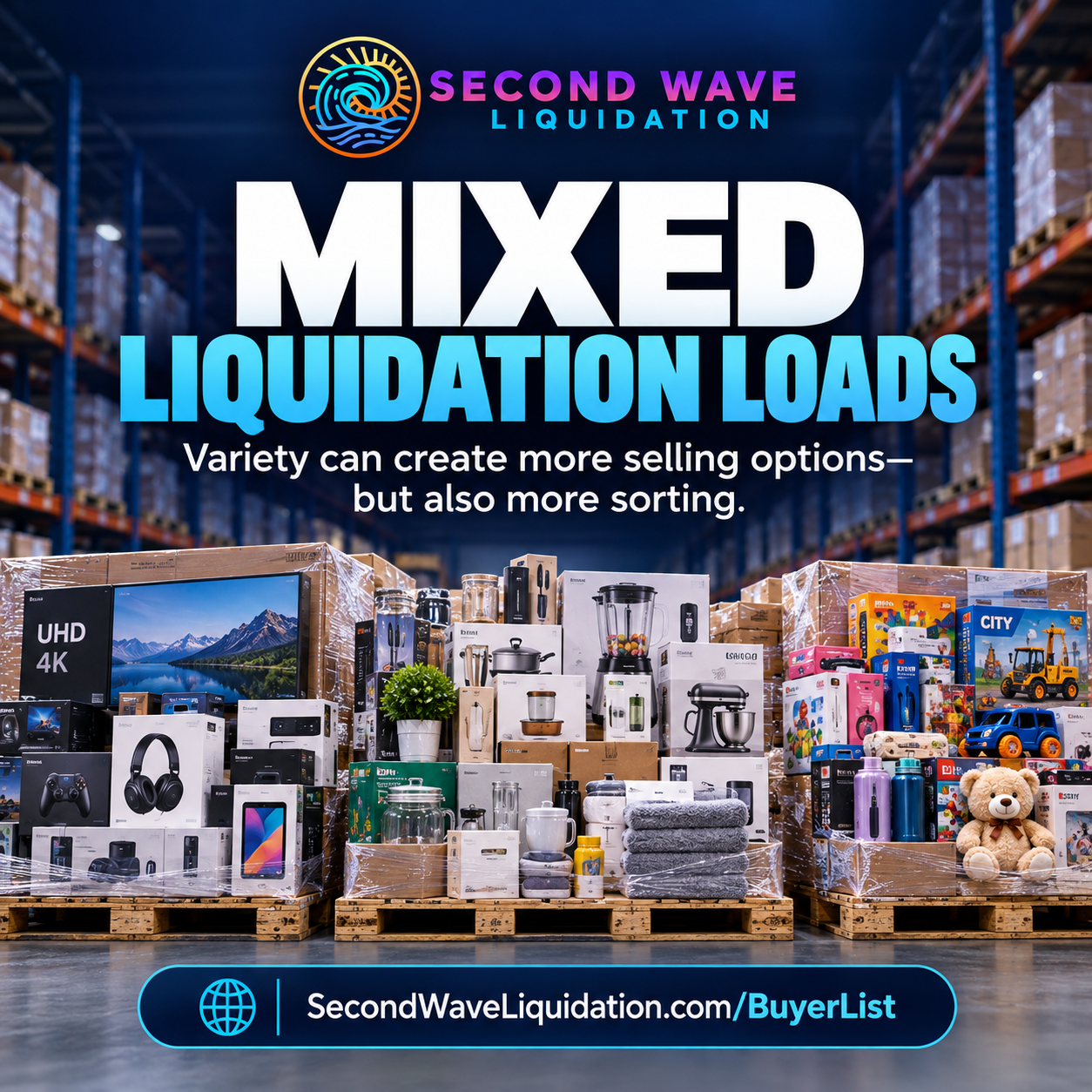
Mixed Liquidation Loads Create Variety and More Sorting
Mixed liquidation loads can contain products across different categories, conditions, sizes, values, or resale opportunities.
For some businesses, that variety is useful.
Bin stores may benefit from having a broad product mix that creates a changing treasure-hunt experience. Flea market vendors may appreciate having merchandise at different price points. Online sellers may discover items suitable for multiple marketplaces.
But variety also creates work.
Mixed inventory may require more sorting, categorizing, testing, cleaning, photographing, pricing, and storage.
Before buying a mixed load, think about your processing capacity as much as the merchandise itself.
A large assortment does not help if your business does not have enough space or labor to work through it efficiently.
You should also consider what happens to products that do not fit your primary sales channel. A buyer with several resale outlets may have more ways to move those items than a seller operating through only one marketplace.
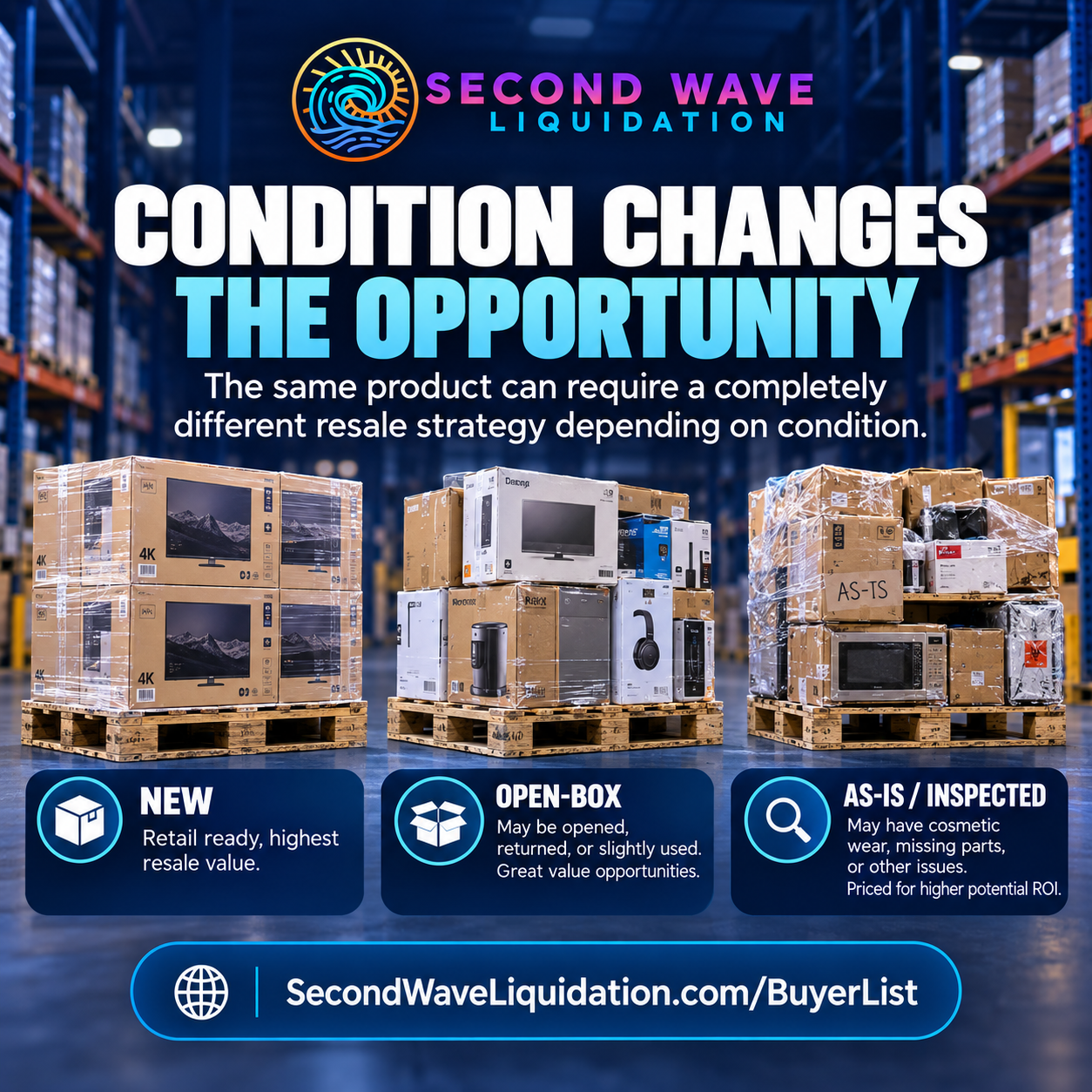
Condition Can Change the Entire Resale Strategy
Two identical products can represent very different resale opportunities depending on condition.
One might be sealed in original packaging. Another may have an open box. A third may need testing, cleaning, missing parts, or a different way of being presented to customers.
Condition affects more than the selling price.
It can influence:
How much labor is required before the product can be listed or displayed
Whether testing is necessary
Which sales channels are appropriate
How accurately the item must be described
How much storage and processing space is needed
How quickly you may be able to move the merchandise
This is why buyers should avoid evaluating liquidation inventory based only on what the products appear to be.
The work required between receiving an item and actually selling it matters.
Match the Inventory Type to How You Sell
There is no single inventory type that works best for every reseller.
A business with trained staff, testing space, and several resale channels may be comfortable processing customer returns or mixed loads.
A smaller seller working alone may prefer merchandise that requires less sorting and preparation.
A bin store may prioritize variety and volume. A discount retailer may care more about consistency and presentation. An online reseller may place greater importance on item-level condition and shipping practicality.
Before buying, ask yourself a few practical questions.
How much inspection will this inventory require?
Where will I sell it?
How quickly do I need it to turn?
Do I have enough room to process and store it?
What costs come after the purchase, including freight, marketplace fees, labor, supplies, and handling?
Those questions often tell you more about whether an opportunity fits your business than the original retail value of the merchandise.
Understanding liquidation inventory means looking beyond the product category.
Overstock, customer returns, closeouts, and mixed loads can each require different levels of inspection, processing, storage, and resale planning. Condition can change the strategy again, even when the underlying product is exactly the same.
The goal is not simply to find inventory at a low acquisition cost. It is to understand what you are buying and whether your business has the right customers, sales channels, space, and systems to handle it effectively.
Stay Connected to Inventory That Fits Your Business
Once you understand which inventory types and conditions work best for the way you sell, sourcing becomes easier to evaluate. Instead of trying to make every opportunity work, you can focus on merchandise that makes sense for your actual resale model.
To stay connected with liquidation and wholesale inventory opportunities from Second Wave Liquidation, join the Buyer List.
Frequently Asked Questions
1. What is overstock liquidation inventory?
Overstock generally refers to extra merchandise a business no longer needs to keep in its regular inventory. It may enter the secondary market without ever being purchased by an end customer.
2. Are customer returns always used products?
No. Customer returns can range from unopened merchandise to opened, tested, used, damaged, or incomplete products. The condition can vary considerably.
3. What is closeout inventory?
Closeout inventory is merchandise being cleared because of changes such as discontinued product lines, packaging updates, seasonal transitions, store changes, or other business decisions.
4. What is a mixed liquidation load?
A mixed load contains a variety of merchandise rather than a single consistent product type. The mix can involve different categories, conditions, sizes, or resale opportunities.
5. Is overstock better than customer return inventory?
Not necessarily. The better option depends on the condition, acquisition and processing costs, customer demand, and how well the merchandise fits your sales channel.
6. Why does product condition matter so much in liquidation?
Condition can affect testing, cleaning, pricing, listing accuracy, labor, storage, resale channel, and how quickly an item can realistically be prepared for sale.
7. Are mixed liquidation pallets good for online resellers?
They can be, especially for sellers comfortable managing different product categories. However, mixed inventory can require significant sorting, research, photography, testing, and individual listings.
8. What should I check before buying customer returns?
Review any available condition information and consider your ability to inspect, test, sort, store, and accurately describe the merchandise after it arrives.
9. How should I decide which liquidation inventory type fits my business?
Start with your existing customers and sales channels. Then consider your available space, labor, testing ability, processing time, costs, and expected inventory turnover.
10. Does a lower liquidation purchase price mean a better opportunity?
No. Purchase price is only one part of the decision. Freight, condition, processing requirements, fees, storage, demand, and realistic resale options can all affect whether the inventory makes sense for your business.
