Pallets vs Wholesale Lots
Pallets vs Wholesale Lots: Which Fits Your Resale Business?
When sourcing inventory for resale, choosing between pallets and wholesale lots is not simply a matter of finding the lowest purchase price. The better option depends on how your business actually operates.
A reseller working from a warehouse may have very different needs from someone selling online from a garage. A flea market vendor may value variety, while a discount store may prefer inventory that can be organized into more predictable product groups.
That is why comparing pallets vs wholesale lots for resellers should start with your customers, available space, processing capacity, and sales channels.
Neither format is automatically better. The goal is to buy inventory that you can realistically receive, process, merchandise, and sell.
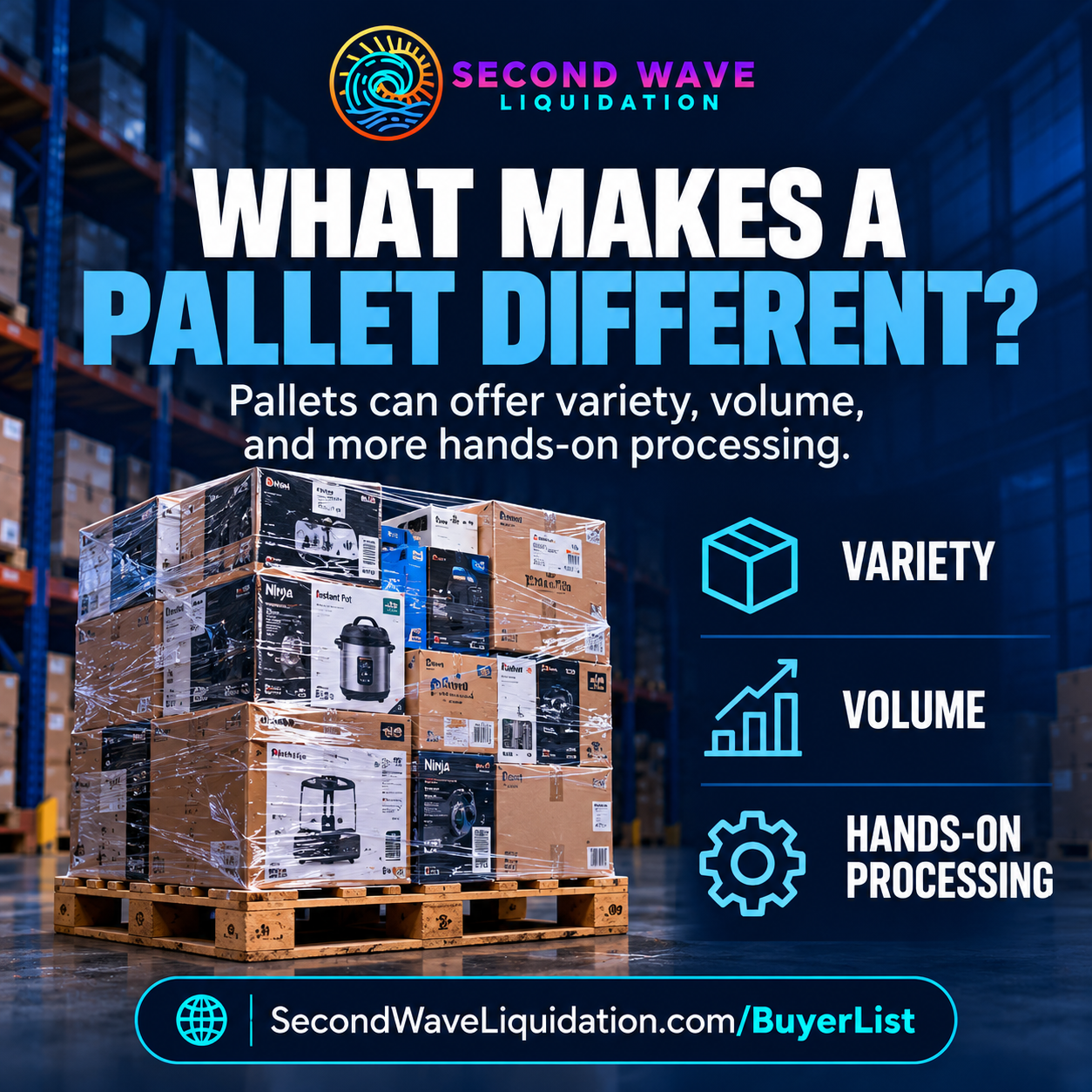
What Makes a Pallet Different?
The word “pallet” can describe many types of liquidation inventory, so the exact product mix and condition can vary from one opportunity to another.
Some pallets may contain mixed merchandise across several categories. Others may be more focused. Depending on the load, inventory could include overstock, closeouts, customer returns, or other types of liquidation merchandise.
For many resellers, the appeal of palletized inventory is the combination of volume and variety.
That variety can also create more work.
Products may need to be sorted by category, inspected, tested, cleaned, photographed, priced, or separated according to condition. Items with damaged packaging, missing parts, or other issues may require a different resale strategy from merchandise that is ready to list or put on a sales floor.
A pallet therefore needs to make sense not only when you buy it, but also when you consider the labor required after it arrives.
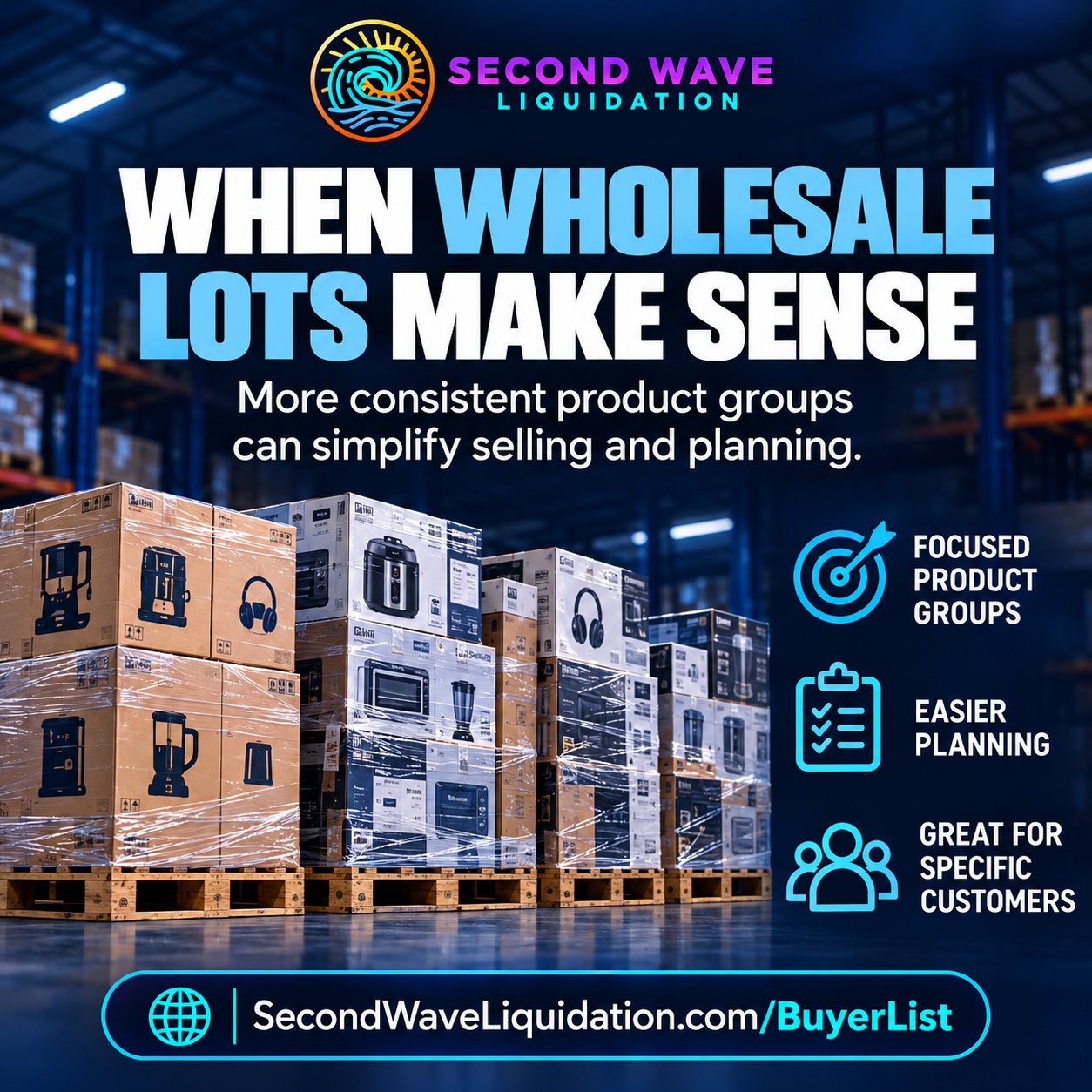
When Wholesale Lots Make Sense
Wholesale lots can be useful when a buyer wants a more focused group of merchandise.
Instead of managing a highly mixed assortment, a wholesale lot may center around a particular category or type of product. The exact composition still depends on the inventory being offered, but greater consistency can make planning easier for some businesses.
A reseller specializing in one product category may find focused lots easier to evaluate because the inventory is closer to what their existing customers already buy.
Consistency can also simplify merchandising.
If several items serve similar customers, you may be able to use the same selling channels, pricing approach, storage area, and product knowledge across more of the load.
However, a more consistent lot is only useful when there is enough demand for that inventory. Buying more of the same type of merchandise does not automatically make it easier to sell.
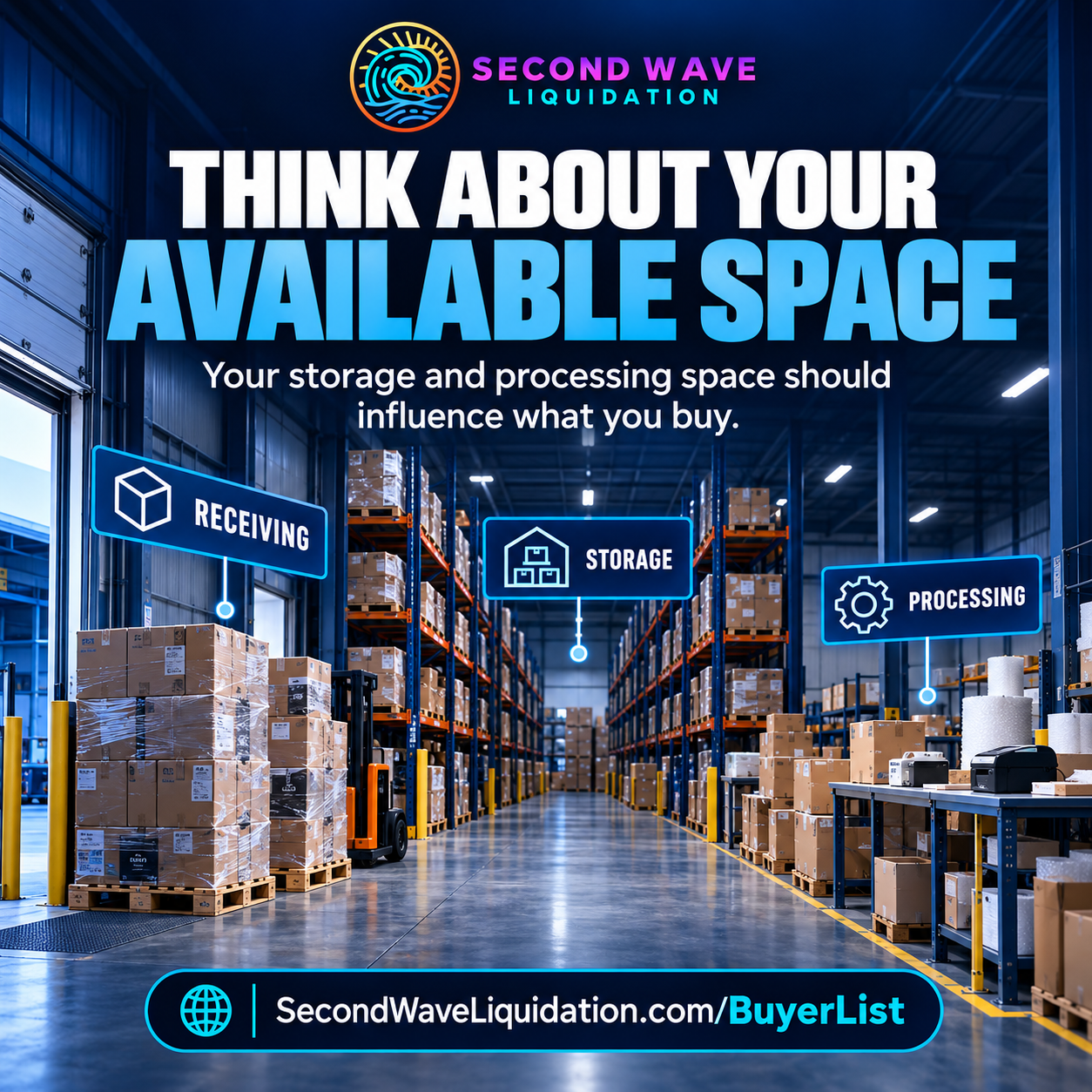
Think About Your Available Space
Storage is one of the easiest costs to underestimate when buying liquidation inventory.
Before purchasing a pallet or wholesale lot, think about where the merchandise will go when it arrives.
You need room for more than the unopened inventory. Products may also require space for sorting, testing, photography, shelving, packing, damaged goods, and items waiting to be listed or sold.
A pallet that physically fits inside a garage may become much harder to manage once everything is removed and separated into individual products.
Larger wholesale lots can create the same challenge. Even relatively organized inventory can become a problem when the amount purchased exceeds the space available to process it.
Your available space should influence both the type and the volume of inventory you source.
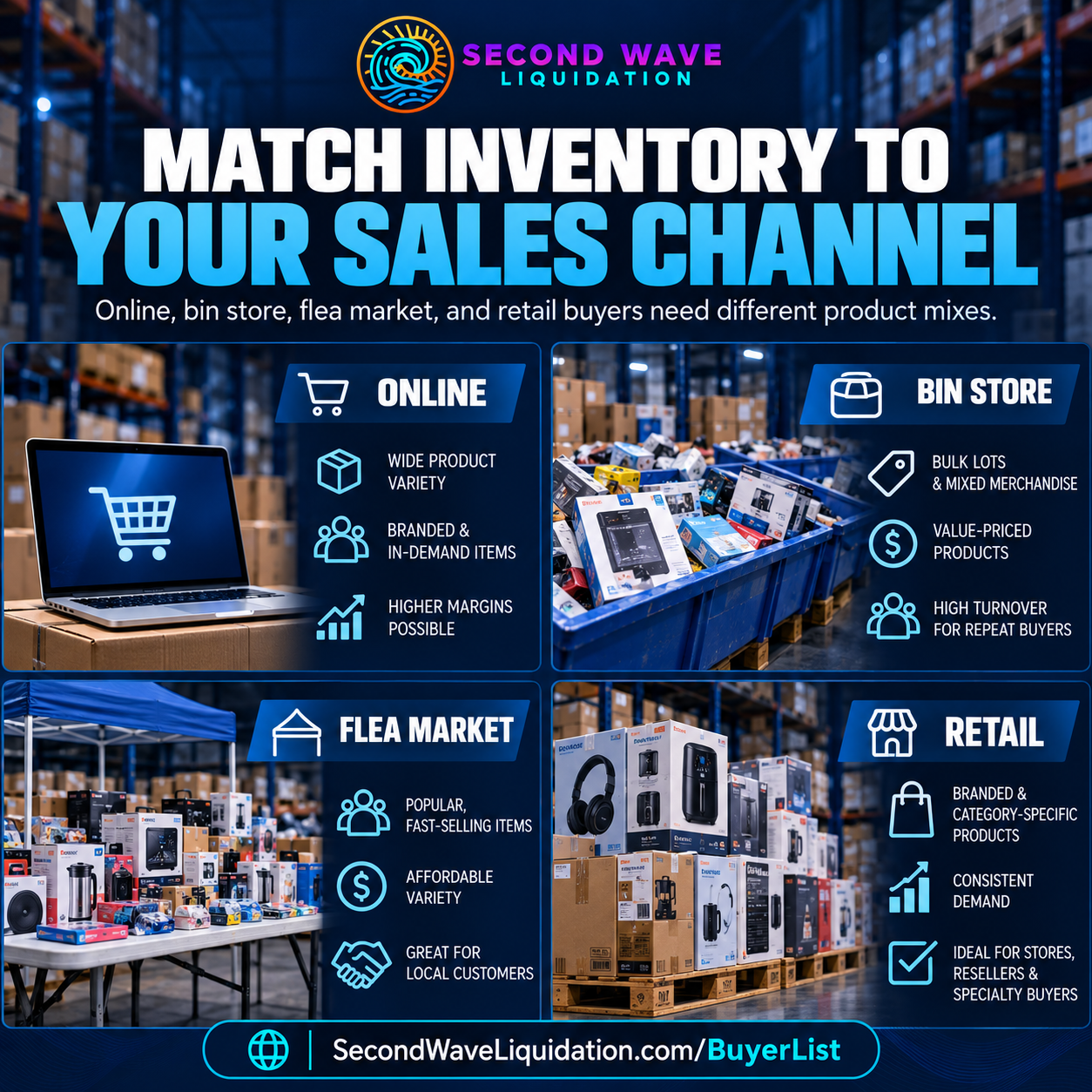
Match Inventory to Your Sales Channel
The same liquidation inventory can perform very differently depending on where it is sold.
An online reseller may prefer products that are practical to photograph, describe, pack, and ship. Marketplace fees, shipping expenses, return handling, and listing time also need to be considered.
A flea market vendor may have more flexibility with mixed inventory because customers can inspect products in person and browse across different categories.
Bin stores often need enough merchandise and variety to support their merchandising model and regular inventory turnover.
Discount stores and small retailers may put more emphasis on products that fit their existing shelves, customer base, and pricing structure.
This is why the question should not only be, “Is this a good pallet?”
A better question is, “Is this inventory suitable for the way I already sell?”
Consider How Much Processing You Can Handle
Inventory does not become sellable simply because it reaches your location.
Mixed liquidation pallets can require significant processing. You may need to identify products, determine condition, check for missing pieces, test certain merchandise, research realistic resale prices, and decide which sales channel fits each item.
That can work well for businesses that already have systems and labor in place.
For a smaller operation, however, too much mixed inventory can create a backlog.
Wholesale lots may reduce some of that sorting when the merchandise is more consistent, but buyers still need to evaluate condition, demand, storage, and the work required before products are ready for customers.
Your buying volume should match the amount of inventory your operation can actually process.
Look at Your Customers Before You Buy
Your current customer base can provide useful clues about which inventory format fits your business.
If customers regularly shop across many product categories, variety may be valuable. A mixed pallet could give you opportunities to offer different types of merchandise without sourcing each category separately.
If customers come to you for a more specific type of product, a focused wholesale lot may be easier to integrate into your existing business.
Past sales can also help.
Look at what moves quickly, what sits too long, what requires frequent discounting, and which categories create the most processing work.
The goal is not simply to bring in more inventory. It is to bring in inventory that has a realistic path from receiving to resale.
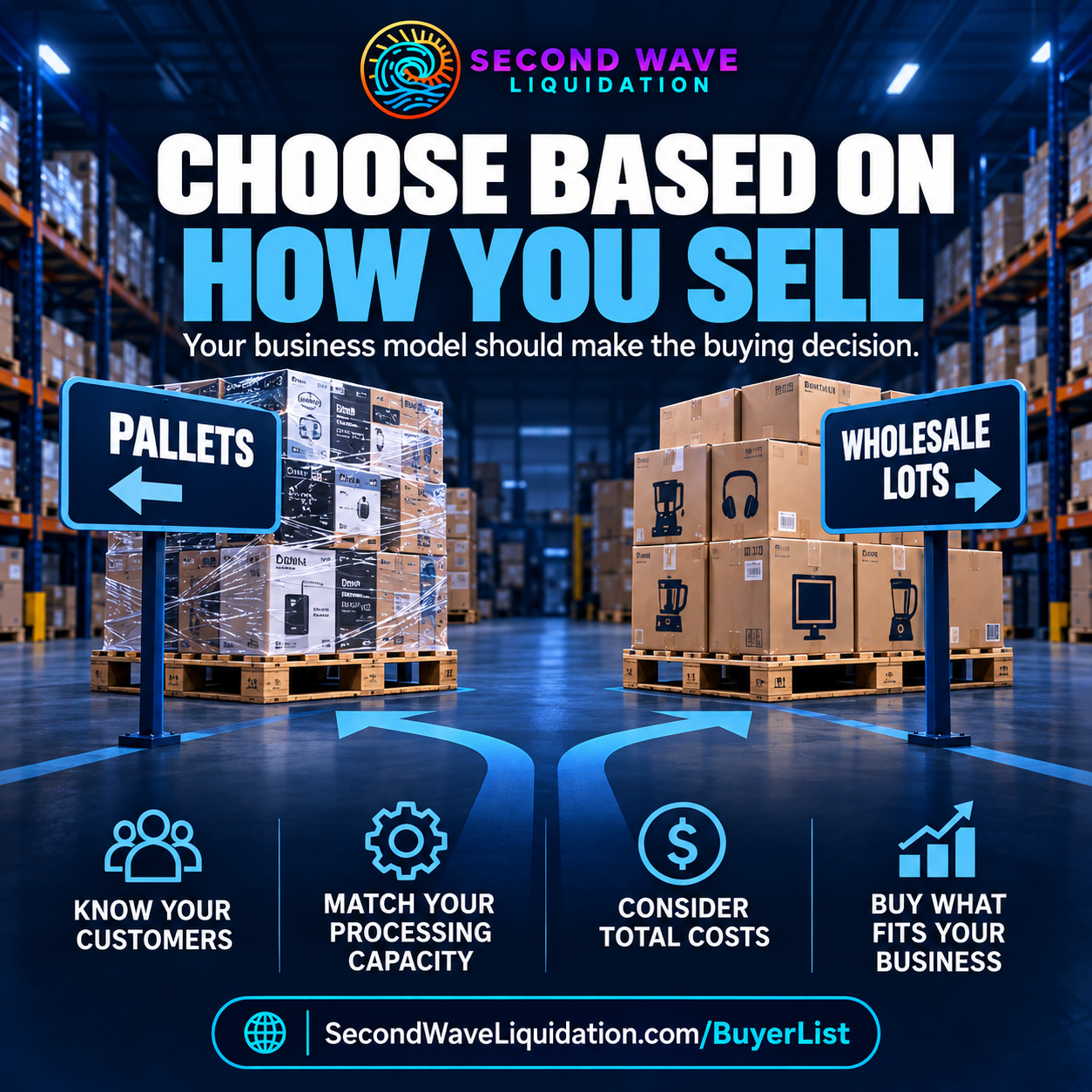
Choose Based on How You Sell
There is no universal answer in the pallets versus wholesale lots comparison.
Pallets may fit buyers who value variety and have the space, labor, and sales channels to work through mixed merchandise.
Wholesale lots may make more sense for businesses that want a more focused product mix that aligns closely with an existing customer base or category.
In both cases, buyers should consider condition, product mix, storage, transportation, processing time, demand, selling costs, and realistic resale prices.
A lower purchase price does not automatically create a better inventory opportunity if the merchandise is difficult for your business to process or sell.
The right inventory is the inventory your operation can actually move.
Keep an Eye on Inventory That Fits Your Business
Once you understand whether pallets, wholesale lots, or a combination of both fits your resale model, sourcing becomes more focused.
Instead of reacting to every available load, you can watch for opportunities that match your customers, space, sales channels, and processing capacity.
To stay connected with liquidation and wholesale inventory opportunities from Second Wave Liquidation, join the Buyer List.
Frequently Asked Questions
1. What is the main difference between liquidation pallets and wholesale lots?
Terminology can vary by seller, but pallets often refer to inventory grouped and shipped on pallets and may contain a broader product mix. Wholesale lots may be organized around a more consistent category or group of products. Buyers should always review the specific details of an opportunity rather than relying only on the label.
2. Are pallets better for new resellers?
Not necessarily. Pallets can provide variety, but they may also require more sorting, testing, storage, and pricing work. New resellers should consider how much inventory they can realistically process before buying.
3. Are wholesale lots easier to sell?
They can be easier to organize when the merchandise is more consistent, but sales still depend on customer demand, condition, pricing, competition, and the reseller's sales channels.
4. Which option is better for online resellers?
Online sellers should consider item size, shipping costs, marketplace fees, listing time, product condition, and how easily individual products can be photographed and described. Either format can work when the inventory fits those requirements.
5. Are mixed pallets good for flea market sellers?
Mixed pallets may work well for vendors whose customers enjoy browsing different categories. However, the vendor still needs enough space and time to sort, price, transport, and display the merchandise.
6. How much storage should I have before buying a pallet?
There is no single amount that works for every pallet. Plan for both the incoming load and the additional room needed once merchandise is unpacked, sorted, tested, photographed, or separated for different sales channels.
7. Should I buy larger wholesale lots to lower my cost per item?
Cost per item is only one part of the decision. Larger quantities can increase storage requirements, processing time, and the risk of holding inventory that moves slowly. Buying volume should match realistic customer demand and selling capacity.
8. What should I check before buying either type of inventory?
Review the available information about product mix, condition, packaging, quantity, transportation, storage requirements, processing needs, and the sales channels you plan to use.
9. Can a reseller use both pallets and wholesale lots?
Yes. Some businesses use mixed pallets for variety and more focused wholesale lots for categories that consistently fit their customers. The right mix depends on the business model and available resources.
10. How do I decide which inventory format fits my resale business?
Start with your customers and sales channels. Then consider available storage, processing capacity, transportation, selling costs, inventory turnover, and how much merchandise you can realistically manage. The format that fits those factors is usually more useful than simply choosing whichever option appears cheapest.
