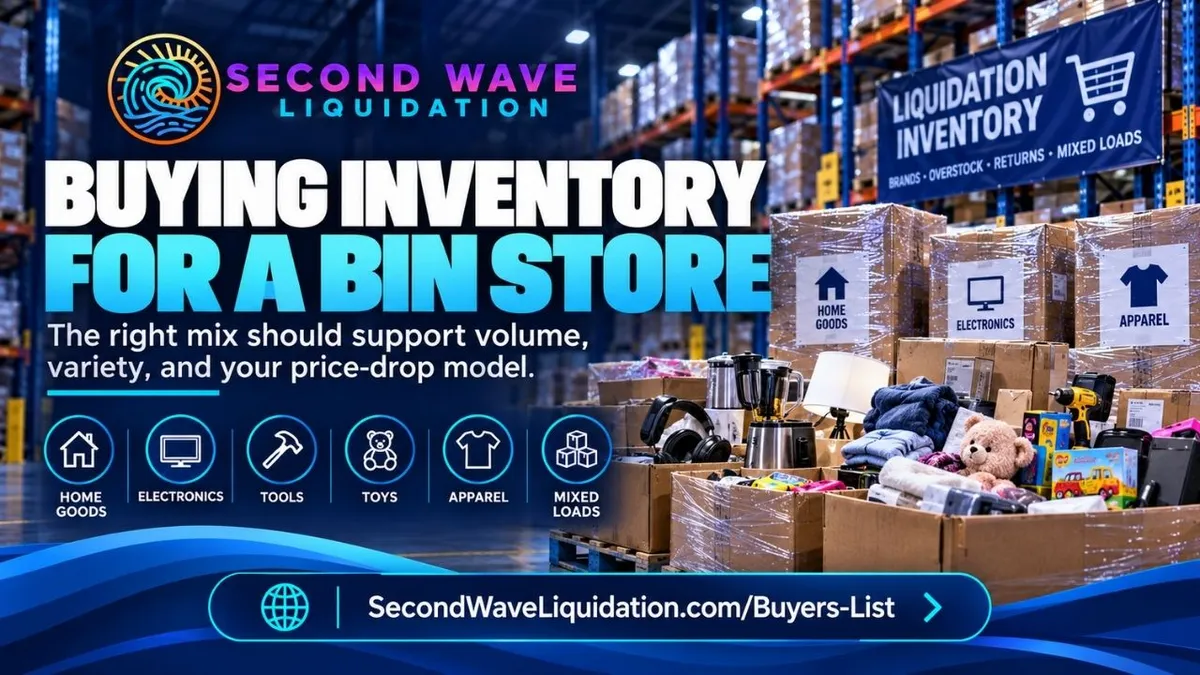
How Bin Store Owners Can Choose Liquidation Inventory Post
Buying liquidation inventory for a bin store requires a different mindset than sourcing for traditional retail or online resale.
A bin store depends on volume, variety, repeat customer interest, and a pricing system that often changes throughout the sales cycle. Inventory has to do more than look good when it arrives. It needs to support the way the entire store operates.
That means evaluating a load based on how well it can fill the bins, keep shoppers interested, move through your price-drop model, and clear enough space for the next restock.
The best inventory is not simply the cheapest load available. It is inventory that fits your store, your customers, and your ability to keep merchandise moving.
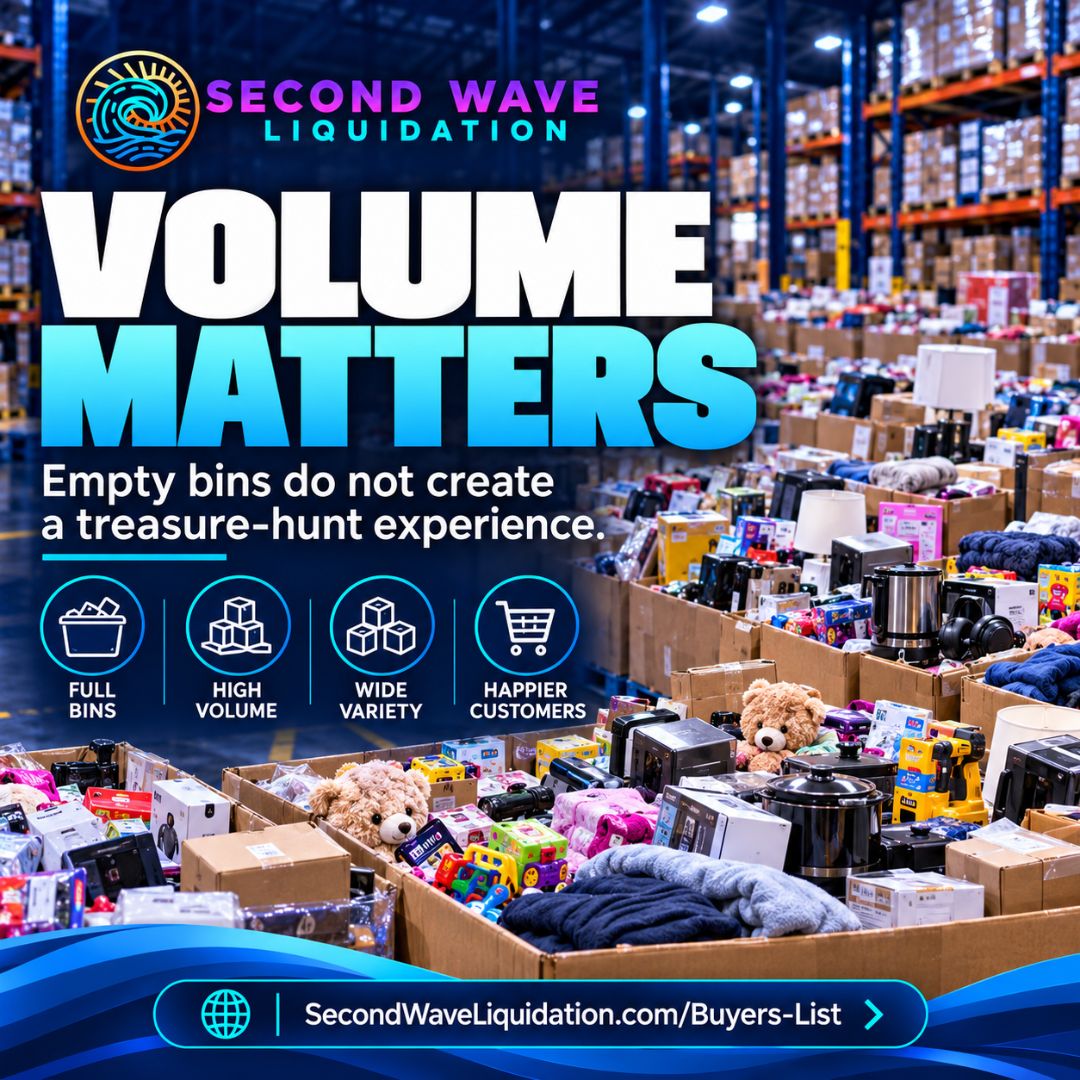
Volume Matters in a Bin Store
Empty bins do not create much of a treasure-hunt experience.
Bin store shoppers generally expect enough merchandise to dig through and enough choices to make the visit worthwhile. If inventory disappears too quickly, the store may feel picked over before the sales cycle is finished.
That makes volume an important part of buying.
Before purchasing a liquidation load, consider how much merchandise your store actually needs to support the number of bins on the floor and your typical restock schedule.
You should also think about storage. Buying significantly more inventory than you can process or stage can create a different problem behind the scenes.
The goal is not maximum volume. It is manageable volume.
A useful load should give your store enough merchandise to maintain the shopping experience without overwhelming your receiving area, storage space, or staff.
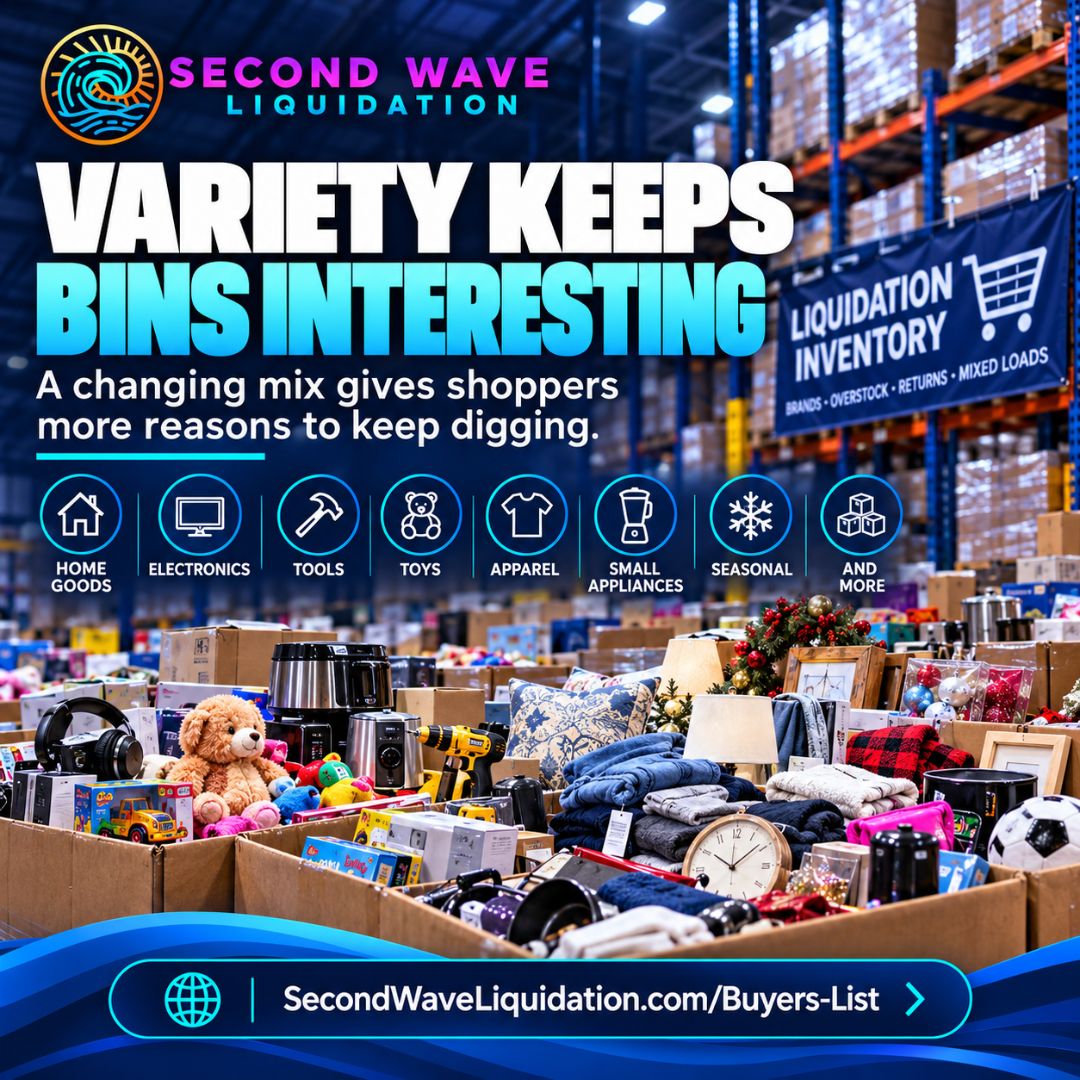
Variety Keeps the Bins Interesting
Variety is one of the reasons customers enjoy the bin store format.
When shoppers do not know exactly what they are going to find, browsing becomes part of the experience. A changing product mix can also give repeat customers a reason to return for future restocks.
For that reason, mixed liquidation inventory can make sense for many bin stores.
However, variety does not automatically mean a good load.
A pallet containing several categories may look diverse, but the mix still needs to be useful for your customers. Large quantities of slow-moving or difficult-to-sell merchandise can take up valuable bin space even when the overall load appears varied.
Look for a mix that gives customers different types of products to discover while remaining practical for your store to process.
The exact categories will depend on the shoppers you serve. What works well in one location may not be the right mix for another.
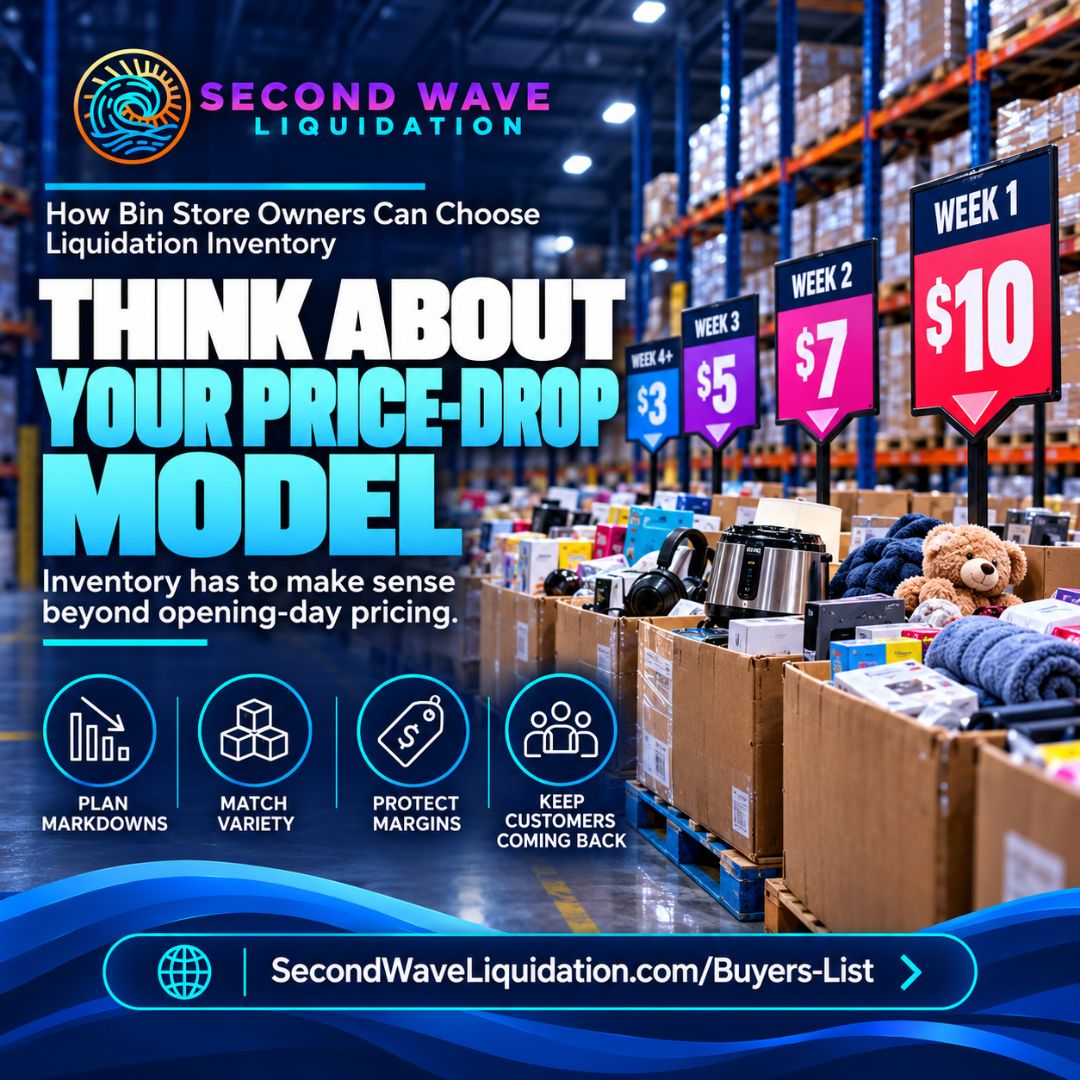
Think About Your Price-Drop Model
Bin store owners should evaluate inventory across the entire sales cycle, not only on opening day.
Many bin stores begin a cycle at one price and reduce the bin price over time. That changes how merchandise needs to perform.
Some products may attract shoppers early in the cycle. Other items may remain until a lower-price day. The load therefore needs to make sense across more than one selling price.
Before buying, ask yourself what happens if certain merchandise does not sell immediately.
Can those items still move later in the cycle?
Will the remaining merchandise continue to offer enough value to customers as prices change?
Will large amounts of slower inventory stay in the bins too long?
The purchase price alone does not answer these questions. Bin store owners also need to consider freight, processing labor, damaged or unsellable merchandise, and the amount of inventory that may remain as prices fall.
Your price-drop model should influence what you buy.
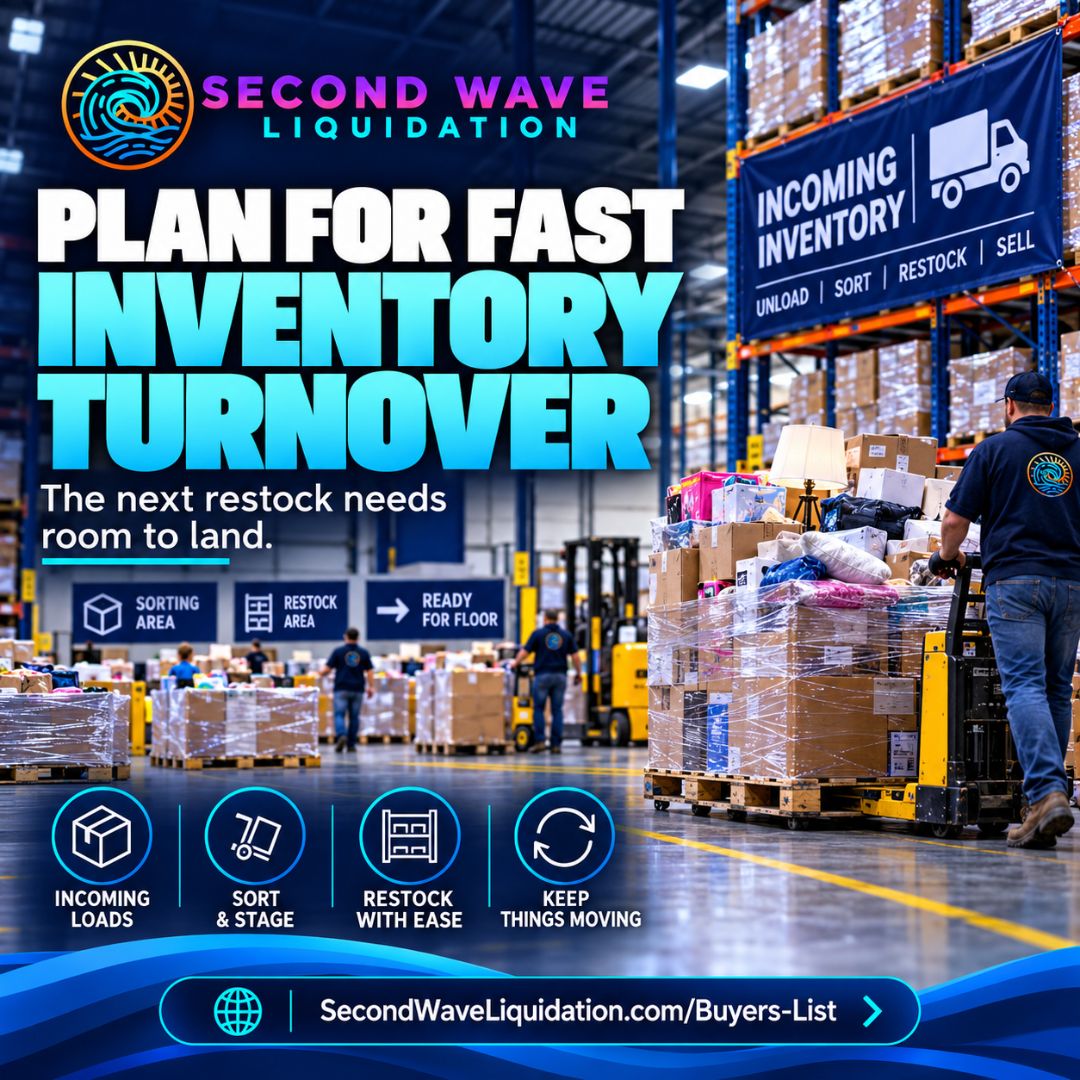
Plan for Fast Inventory Turnover
The next restock needs somewhere to go.
That makes inventory turnover especially important for bin stores.
Slow-moving merchandise can create congestion on the sales floor and in storage. If too much of the previous load remains, bringing in the next load becomes harder.
Pay attention to what happens at the end of each sales cycle.
Which product categories consistently move?
Which ones remain in the bins?
How much merchandise has to be moved, discounted differently, donated, repurposed, or handled through another resale channel?
Those patterns can help improve future buying decisions.
A load does not have to sell completely within one cycle to be useful, but the store needs a realistic exit strategy for merchandise that does not move as expected.
Fast turnover helps preserve space, maintain variety, and prepare the floor for future restocks.
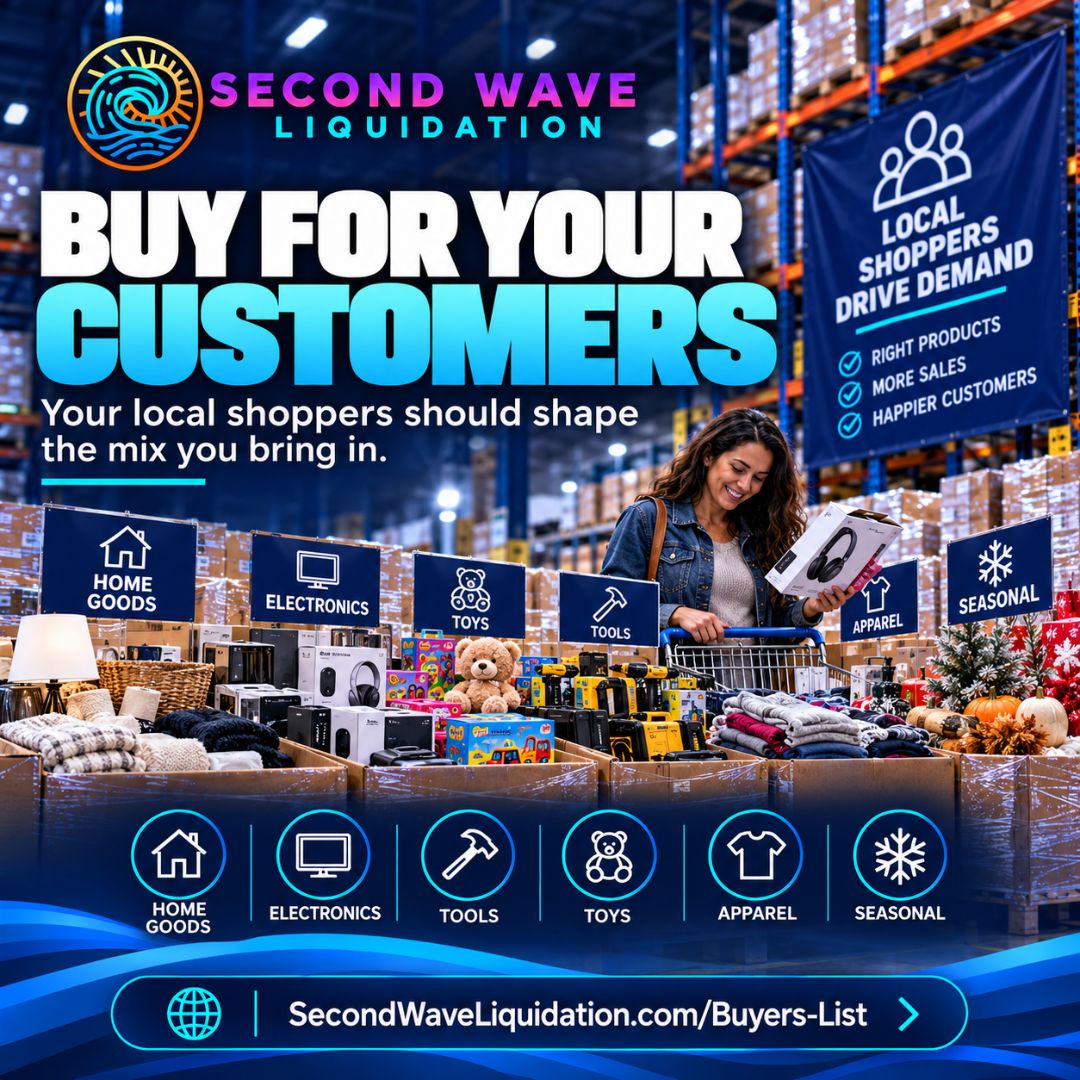
Buy for Your Customers
Your local shoppers should have a major influence on the inventory you source.
A product category that performs well at one bin store may receive much less attention somewhere else.
Look at what your own customers actually buy.
You might notice that certain household products disappear quickly while another category repeatedly lasts until the lowest-price days. You may find that shoppers respond strongly to small electronics, toys, tools, apparel, home goods, or another product mix.
Those observations are valuable.
Instead of chasing inventory simply because it sounds attractive, use your sales history and customer behavior to guide sourcing decisions.
Your customers can tell you a lot about what your next load should contain.
Consider the Processing Work Behind the Load
Bin inventory still has to be received and prepared before customers can shop it.
Depending on the load, your team may need to sort merchandise, remove damaged packaging, identify unsellable items, inspect products, or separate merchandise that should not go directly into the bins.
That takes labor and space.
A heavily mixed load may provide excellent variety but require considerably more sorting. Customer-return inventory may require additional inspection compared with cleaner overstock or closeout merchandise.
Neither type is automatically better.
The question is whether your operation can handle the processing required.
Before buying, consider how quickly your staff can move inventory from receiving to the sales floor without disrupting the next restock.
Balance Volume, Variety, and Turnover
The strongest bin store buying decisions usually balance several factors at once.
You need enough merchandise to support the bins, enough variety to keep shoppers interested, pricing that works through the full price-drop cycle, and turnover that creates space for future inventory.
You also need the product mix to make sense for the people who actually shop your location.
A load can look attractive and still be the wrong fit if it creates too much processing, takes too long to sell, or does not match local demand.
Final Thoughts
Choosing liquidation inventory for a bin store is about more than filling bins.
The inventory should support the entire store cycle—from receiving and sorting to restock day, price drops, sell-through, and the next incoming load.
Volume keeps the floor active. Variety keeps the hunt interesting. Your price-drop model helps determine what the merchandise needs to support financially. Fast turnover protects space. And customer demand tells you which products are worth bringing back.
When those pieces work together, inventory buying becomes more deliberate and easier to repeat.
If you already know the types of inventory that work best for your bins, customers, and restock cycle, the next step is staying connected when relevant opportunities become available.
Join the Second Wave Liquidation Buyer List
10 Frequently Asked Questions
1. What type of liquidation inventory is best for a bin store?
There is no single best type. The right inventory depends on your customers, bin capacity, price-drop model, processing ability, and how quickly merchandise typically turns.
2. Why is inventory volume important for bin stores?
Bin stores need enough merchandise to keep bins stocked and maintain the treasure-hunt experience throughout the selling cycle.
3. Is mixed liquidation inventory good for bin stores?
It can be. Mixed loads may provide useful variety, but they can also require more sorting and processing before merchandise reaches the floor.
4. How much inventory should a bin store buy?
Buy enough to support your restock schedule without exceeding your storage, staffing, and processing capacity.
5. Why should the price-drop model affect inventory buying?
Products need to make sense across the full sales cycle. Inventory that only works at the highest bin price may become difficult to move later.
6. How can bin store owners improve inventory turnover?
Track what sells quickly, identify categories that repeatedly remain, adjust future purchases, and have a plan for merchandise that does not move during the normal cycle.
7. Should bin stores always choose the cheapest liquidation loads?
No. Purchase price is only one factor. Freight, processing, condition, customer demand, storage, and sell-through should also be considered.
8. How does customer demand affect bin store sourcing?
Local buying habits help show which categories deserve more space and which products may be harder to move.
9. Do customer returns work for bin stores?
They can, but returns may require inspection, sorting, testing, or additional handling depending on condition.
10. What should a bin store owner check before buying a liquidation load?
Review the product mix, condition, expected volume, processing requirements, storage needs, freight, price-drop compatibility, customer demand, and plan for unsold inventory.
